
Solar Utilities
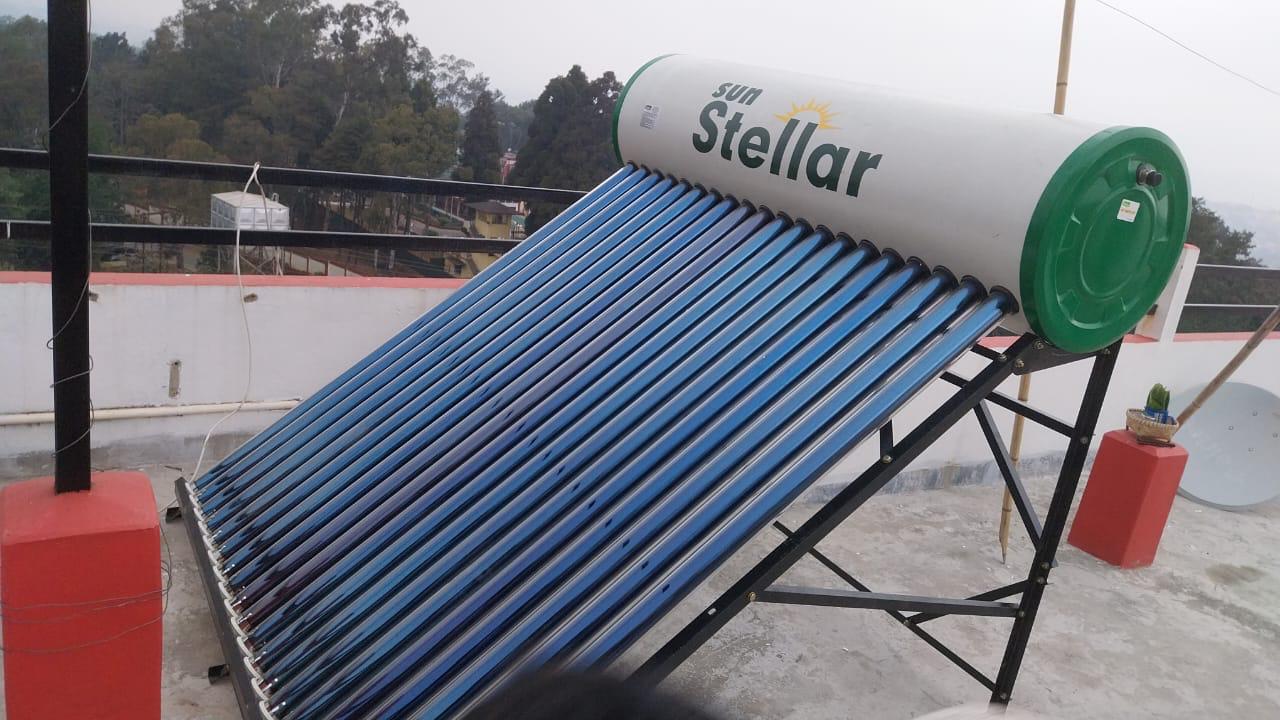
ETC solar water heater
ETC solar water heater—short for Evacuated Tube Collector
Description
An ETC solar water heater—short for Evacuated Tube Collector—is one of the most common and effective types used today, especially in places like India where sunlight varies a lot through the year.
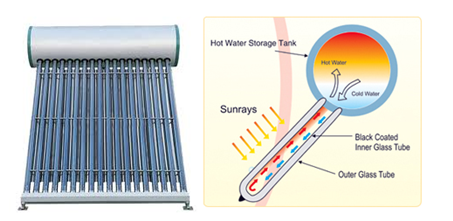
Basically, it works like this. The main part is a bunch of long glass tubes, usually 15 to 30 of them, depending on the system size. Each tube is actually two layers: an outer transparent glass tube and an inner one coated with a special dark material that absorbs sunlight really well. Between those two layers is a vacuum, which acts like super-good insulation—no air means almost no heat can escape through conduction or convection.
Inside most modern ETC systems there's a thin copper heat pipe running down the center of each tube, with a small amount of special fluid (usually non-toxic and low-boiling). When sunlight hits the absorber coating, it heats up the fluid inside the pipe. The fluid turns into vapor, rises to the top of the pipe (which sticks into a insulated manifold box), and there it gives off its heat to the water flowing through the manifold. The vapor cools, condenses back to liquid, and drips down to start the cycle again. This is called a heat-pipe system, and it's passive—no pump needed in most home setups.
The heated water naturally rises into the storage tank above (thermosiphon effect), cooler water flows down to the tubes, and the whole thing circulates on its own as long as there's sun. On cloudy days or in winter the vacuum insulation helps a lot, so these systems keep performing better than the older flat-plate collectors (FPC) when conditions aren't perfect.
Advantages that make ETC popular:
- Higher efficiency overall, often 15–25% better than flat-plate in real-world use, especially in cold, cloudy, or winter conditions.
- They capture sunlight from different angles during the day because of the round tubes, so they work longer hours.
- Good with hard water areas—scaling is easier to manage since water doesn't usually flow directly through the tubes.
- Individual tubes can be replaced if one breaks (though hail can crack them, so some people add guards).
- Usually cheaper upfront and take less roof space for the same output.
Downsides:
- The glass tubes are more fragile than flat-plate panels—strong hail or something hitting them can break one.
- In very hot summer with low hot-water use, they can sometimes overheat (stagnation), though good designs handle it.
- Need occasional cleaning of dust on the tubes to keep efficiency up.
- Look a bit more industrial on the roof compared to flat panels.
In Pune, with decent sunny days most of the year but some cloudy/rainy periods, ETC tends to be the go-to choice for most homes—people usually go for 100–300 liter systems depending on family size. If you're sizing one, a rough guide is 50–75 liters per person, south-facing at about 20–30° tilt.
Let me know if you'd like specifics on brands, approximate costs right now, or how it compares directly to FPC for your setup.
Need a Custom Solar Solution?
We provide tailored installations for homes and industries. Get in touch with our engineering team today.
Contact Us